A Gathering of Practice, Presence, and Community
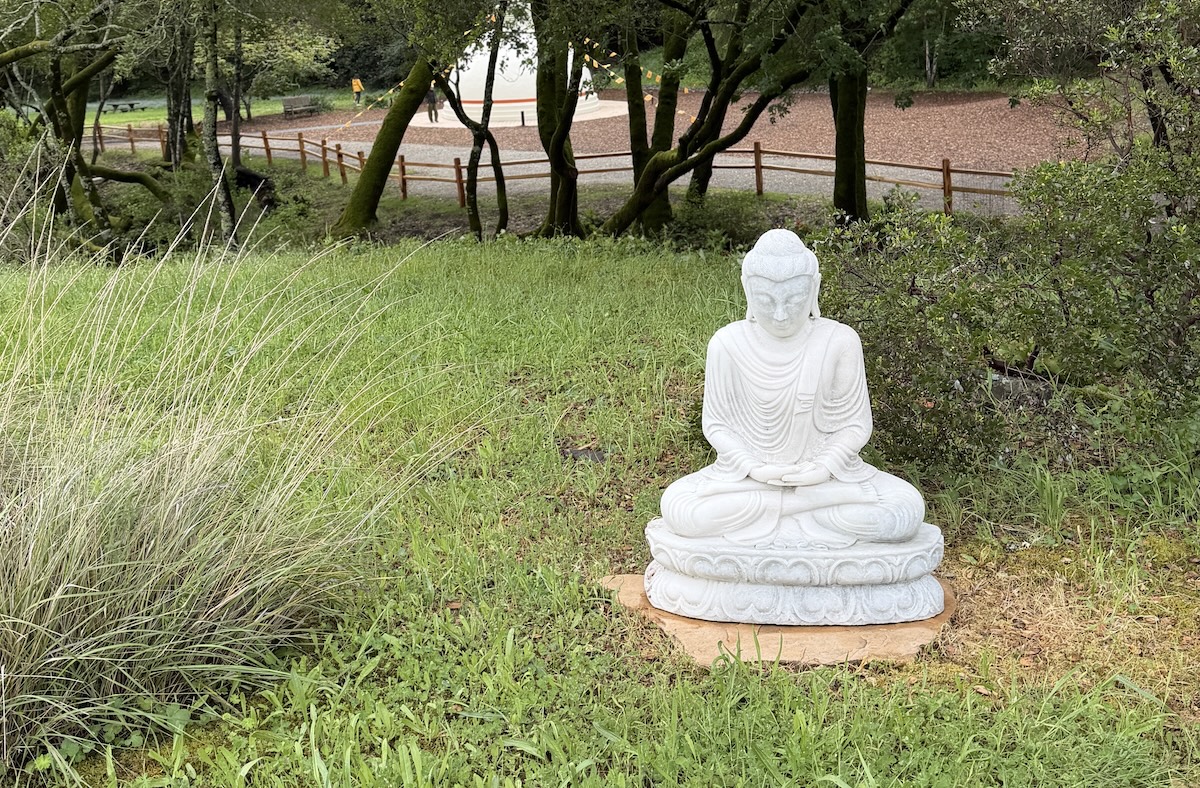
This April, I gathered with my Mindfulness Meditation Teacher Certification Program (MMTCP) community in the rolling spring hills of Northern California at Spirit Rock Meditation Center—while also connecting with our global saṅgha online.
It was a non-residential retreat, but in many ways, it felt deeply immersive. A return. A remembering.
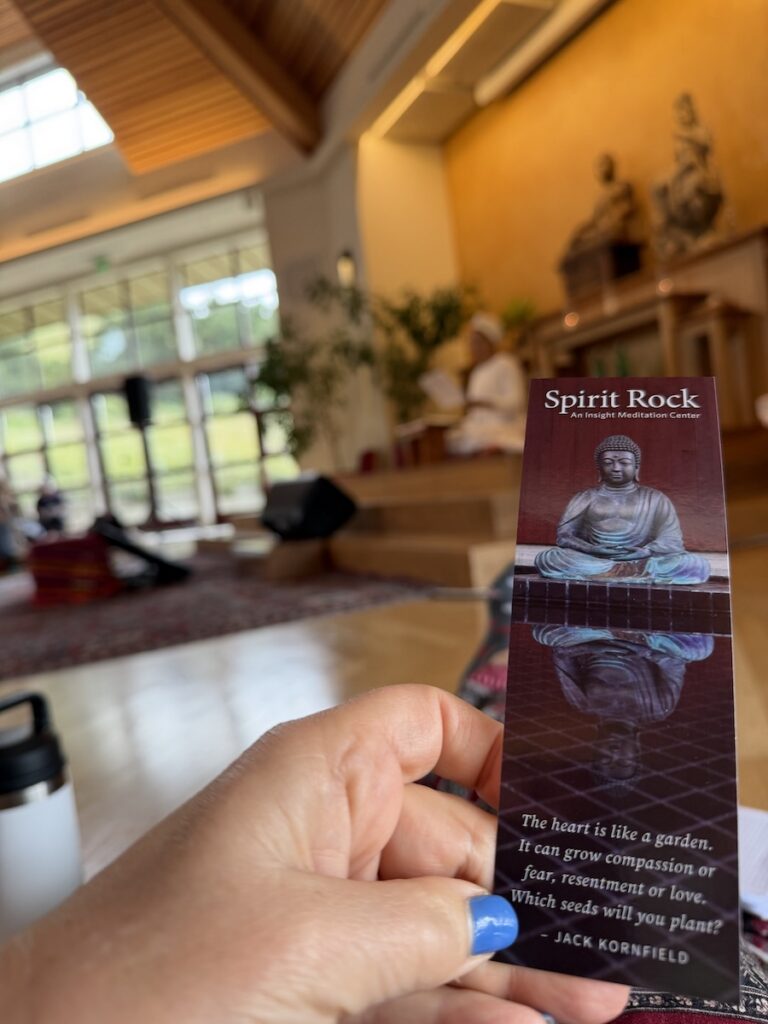
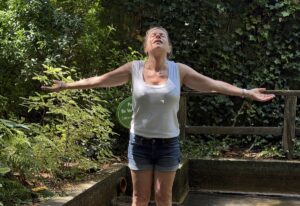
Each day was anchored in practice. Mornings began in noble silence, settling into meditation and teachings that grounded us in presence. Woven into the rhythm of each day was daily Qigong with Teja Bell—a gentle yet powerful way of returning to the body through slow, intentional movement and breath.
Throughout the day, there were also opportunities for self-guided practice—walking meditation, stillness, or quiet movement. During breaks, many of us found ourselves moving slowly along the land, integrating the teachings step by step, breath by breath.
The afternoons opened into connection—walking the land, sharing conversations, and then returning for workshops designed to strengthen both practice and teaching. Evenings were left intentionally open, offering space for integration, rest, or quiet connection.
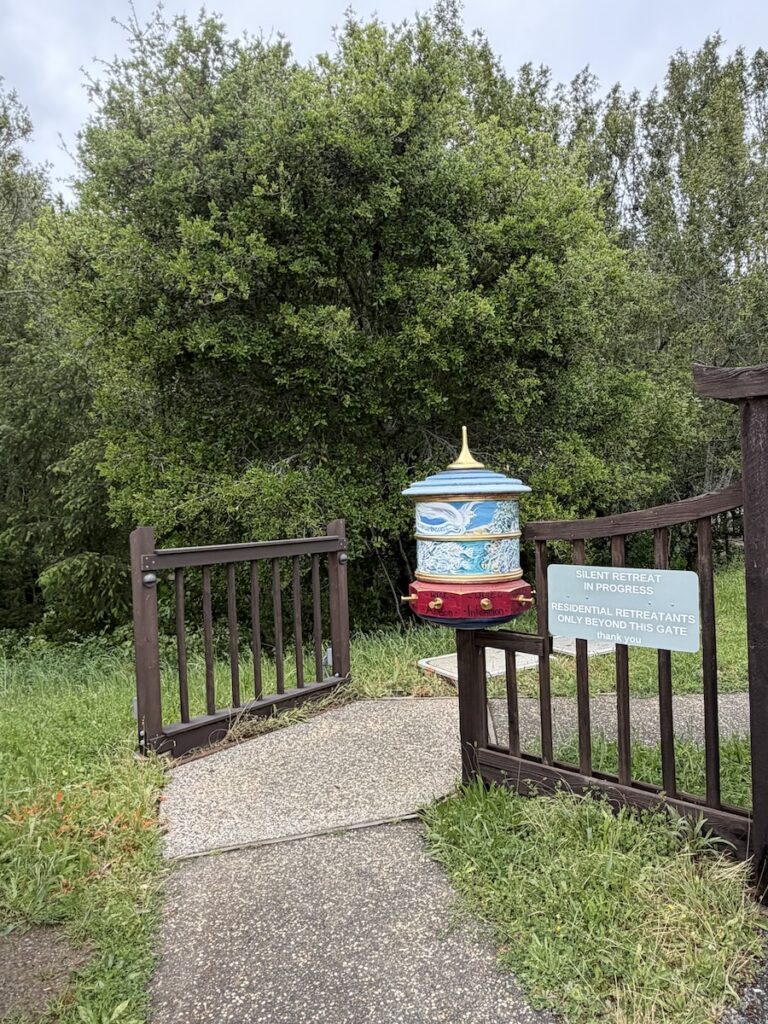
The intention of the gathering was simple yet profound: to nourish the body, mind, and spirit, deepen our practice as mindfulness teachers, and come together in a way that supports both personal growth and our collective ability to meet the world with clarity and compassion.
The Heart of the Gathering: The Three Refuges
The theme of the weekend centered on the Three Refuges—the Buddha, the Dharma, and the Sangha, also known as the Three Jewels.
What struck me most was the reminder that refuge is not about stepping away from the world—it’s about learning how to be fully within it.
- Buddha as our inner knowing—the capacity for awareness and awakening
- Dharma as the wisdom of the teachings and the truth of our lived experience
- Sangha as community—the space where we are held, reflected, and strengthened
There was a shared intention among the teachers—Tara Brach, Anne Cushman, Kate Johnson, Kazu Haga, Teja Bell, and Jill Satterfield—to create a field of care and connection that would support us not just as practitioners, but as teachers navigating a complex and often overwhelming world.
If you’re curious to explore their work more deeply:
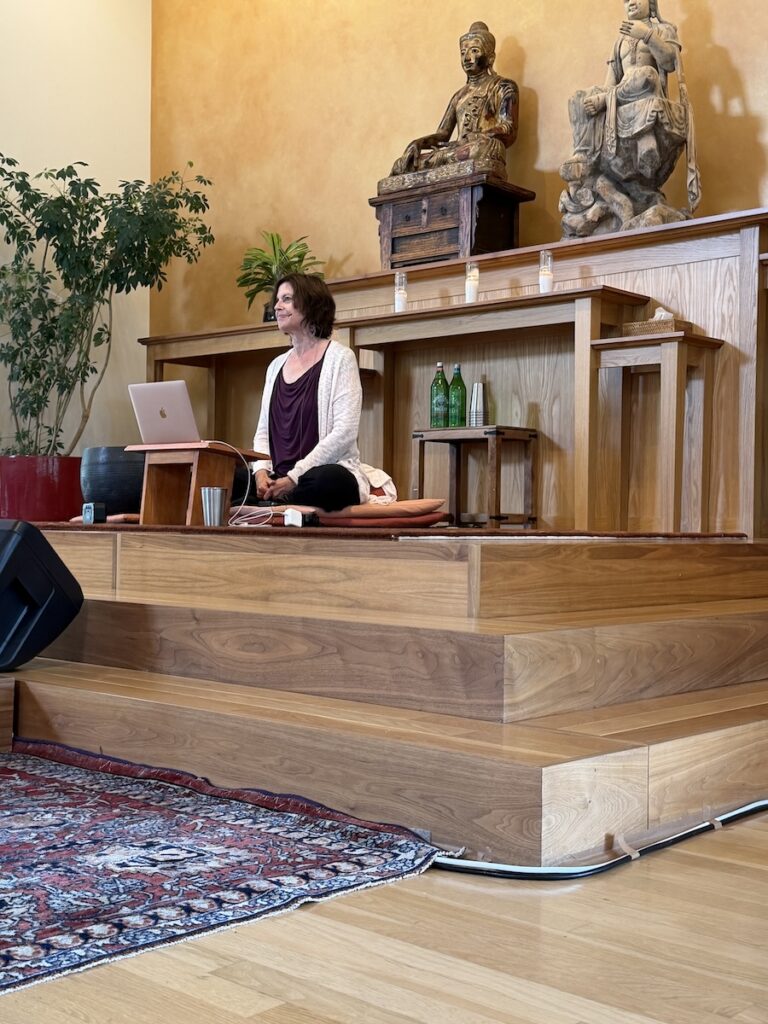
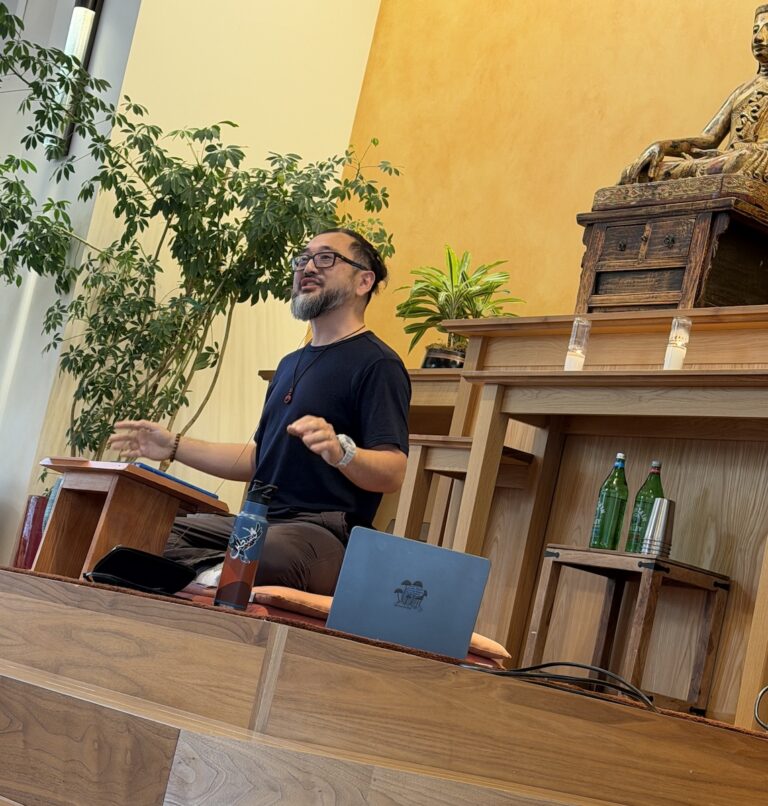
Returning to the Body: Day One
One of the most powerful threads of the first day was the invitation to come back into the body. Through the teachings on the elements—earth, water, fire, and air—we explored how deeply interconnected we are, not just conceptually, but physically and energetically. The body became a doorway into presence.
Later, in a session with Jill Satterfield, something subtle but transformative was illuminated:
we often live inside the stories of our minds, unaware that the body senses what is arising before the mind creates meaning around it. When we shift our attention into the body—especially in moments of stress or anxiety—we begin to catch the experience earlier, before it spirals into a narrative. A quote I’ve always returned to resurfaced during the session:
“Between stimulus and response there is a space. In that space is our power to choose our response. In our response lies our growth and our freedom.”
—Viktor E. Frankl
That space—so small, yet so powerful—is where practice lives.
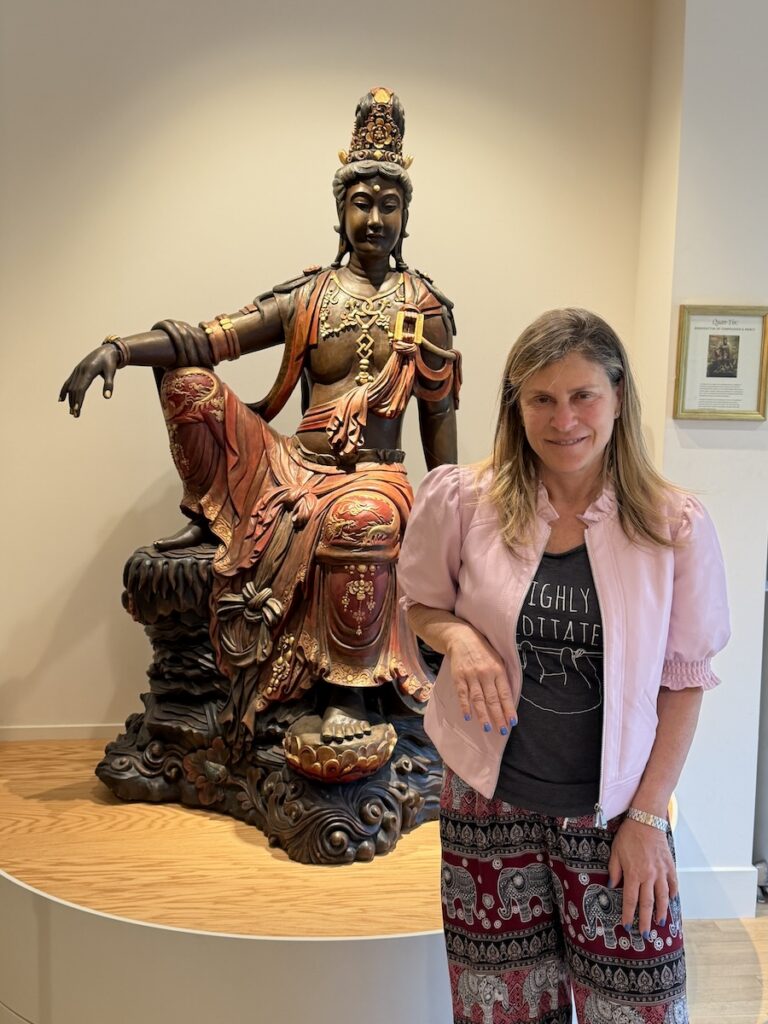
Impermanence and the Winds of Life: Day Two
The second day brought us into the teachings of impermanence and equanimity—a remembering that everything moves. Both what we want to hold onto and what we wish would pass more quickly.
Through reflection and shared teachings, we touched into the truth of interconnection—that we are not separate from the world around us, but part of its unfolding. Poetry was woven into the day, offering a deeper, more intuitive way of understanding these truths.
These poems beautifully expressed what words alone often cannot:
We Have a Beautiful Mother — Alice Walker
We have a beautiful mother
Her hills are buffaloes
Her buffaloes hills.
We have a beautiful mother
Her oceans are wombs
Her wombs oceans.
We have a beautiful mother
Her teeth the white stones
at the edge of the water
the summer grasses her plentiful hair.
We have a beautiful mother
Her green lap immense
Her brown embrace eternal
Her blue body everything we know.
Self-Portrait as Tuning Fork — Rosemerry Wahtola Trommer
There is, perhaps you’ve felt it,
a moment when the day falls away
and your name falls away and
everything you thought you knew
falls away and for a moment
you know yourself only
as whatever it is
that continues—
your whole body abuzz
with the eternity of it—
and you quiver
as if struck by the great hand
of what is true,
becoming pure tone,
more vibration than flesh,
a human-shaped resonator
tuned to the frequency
of life itself…
The Niagara River — Kay Ryan
As though
the river were
a floor, we position
our table and chairs
upon it, eat, and
have conversation.
As it moves along,
we notice—
as calmly as though
dining room paintings
were being replaced—
the changing scenes
along the shore.
We do know, we do
know this is the
Niagara River, but
it is hard to remember
what that means.
In the afternoon, we explored the Eight Worldly Winds—the forces that so often shape our experience: gain and loss, praise and blame, fame and disrepute, happiness and unhappiness.
These are not abstract ideas—they are the very conditions of human life. These “winds” are constantly shifting and impermanent, and much of our suffering comes from clinging to the pleasant and resisting the unpleasant.
These patterns are deeply human. We reach for what feels good and resist what doesn’t. But the teaching invited us into something deeper—
to see these as passing conditions, not fixed truths.
To stay steady within the movement.
If you’d like to explore this teaching more deeply, I found this to be a beautiful and accessible explanation:
→ The Eight Worldly Winds (One Mind Dharma)
Later, in a powerful session with Kazu Haga, we were reminded of the importance of community—not just as a spiritual container, but as a force for collective transformation.
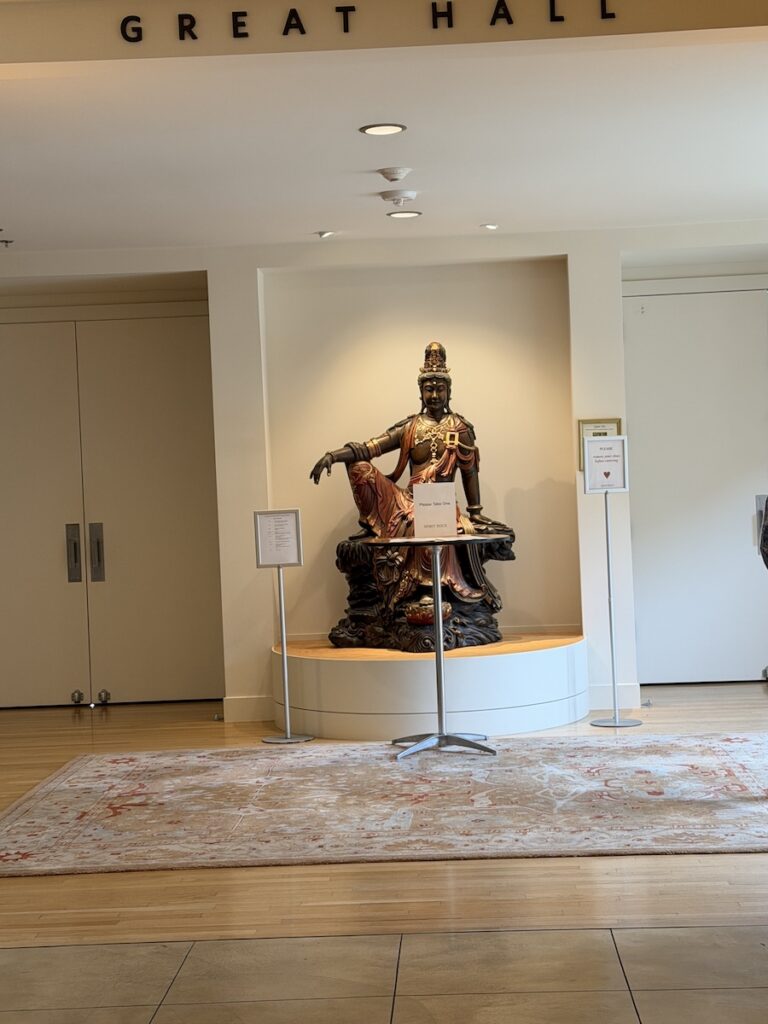
The Strength of Sangha: Day Three
By the third day, the focus turned fully toward Sangha—the refuge of community.
Sangha was explored as:
- a ground
- a path
- a fruition
A place to land, a way to practice, and ultimately, a source of strength.
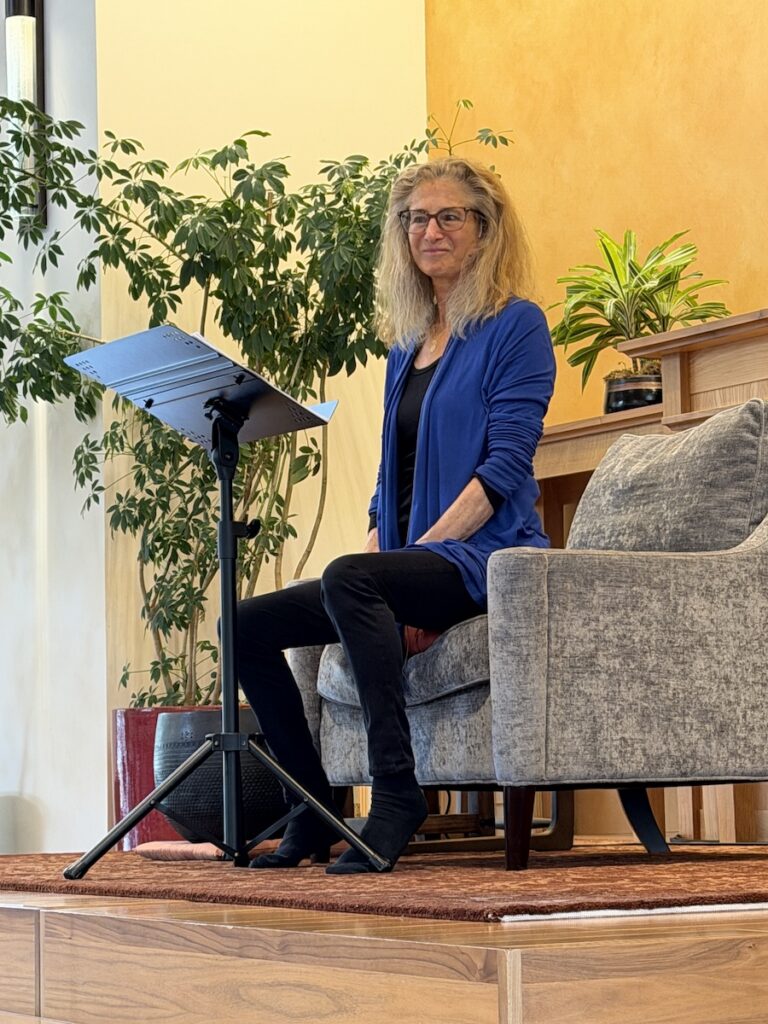
Tara Brach – Widening the Circles of Compassion
In the final day’s teachings, everything came together through the lens of compassion.
There was a return to something both simple and profound: that we can wake up to caring.
At the heart of the teachings was the reminder that everyone has basic goodness—that everyone belongs.
What often gets in the way is not the absence of goodness, but the ways we become disconnected from it—getting caught in blame, judgment, or indifference.
The invitation was to shift how we relate to others, especially in moments of difficulty: to look for the goodness in each person, even when it feels hidden.
And just as importantly, to turn inward.
When we find ourselves blaming others, we can pause and gently ask: What is happening inside of me right now?
This practice of awareness softens reactivity and opens the door to compassion—both for ourselves and for others.
As Thich Nhat Hanh reminds us: “Don’t let the insanity of the world rule your life.”
Instead, we return—again and again—to presence, to care, and to the understanding that even in a complex and challenging world, compassion remains available.
Carrying It Forward
As the gathering came to a close, what remained wasn’t just the teachings—it was the felt sense of connection.
A reminder that we don’t practice alone.
That we are supported.
That we belong.
And what feels especially meaningful is that this experience doesn’t end here. As MMTCP alumni, we have ongoing access to a rich network of resources—continued teachings, practice opportunities, and a community that remains deeply committed to growth, connection, and service.
That continuity matters. It transforms a moment into a path.
And what I continue to see in my own life is that the more I practice these teachings—not just in meditation, but in how I live, relate, and respond—the more naturally they begin to flow into my work.
Because ultimately, the work is not to step away from the world—
but to meet it with presence, compassion, and an open heart.